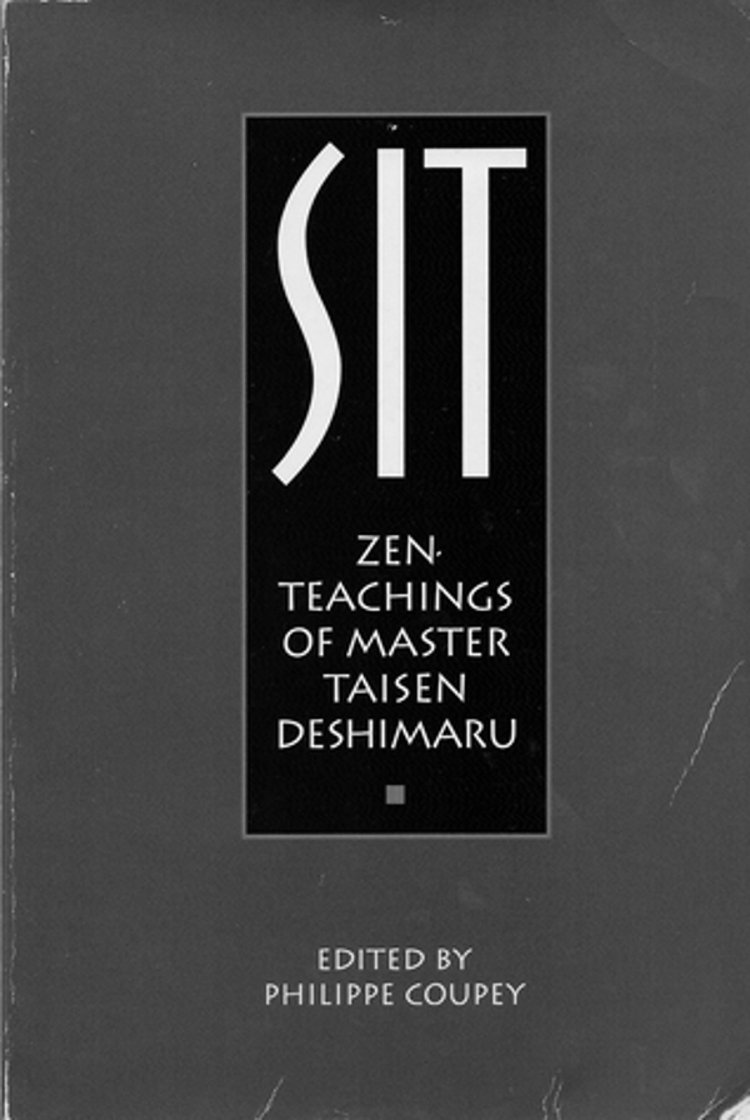
At 376 pages, Sit is the longest Deshimaru volume in English and the least tidy, which is exactly why it is worth having. Hohm Press published it in 1996, edited by Philippe Coupey from four sesshins held in the French Alps across six weeks in the summer of 1978.
The short books available in English are compressed: a hundred-odd pages, edited down, the teaching separated from the circumstances that produced it. This one keeps the circumstances. Deshimaru gave an introductory talk to newcomers at the start of each of the four retreats, and Coupey includes all of them, so the reader gets the same ground covered several times in different moods. He also keeps what happened around the talks. A summer camp of that size, with people arriving from across Europe to sit for days in an alpine village, produces friction: arguments over trivial things, disciplinary problems, people who find they cannot cope with the silence, staff behaving like staff. None of it is cleaned out.
The effect is that a reader sees what a sesshin actually is, rather than an idealised version. The teaching happens inside a mess of ordinary human difficulty, and Deshimaru deals with the mess in the same voice he uses for the Dharma, which was the point he made constantly: there is no separate spiritual compartment where the real practice happens.
Its substantive spine is the difference between Rinzai and Soto, and through that, the question of education. Deshimaru had trained in both worlds and had complicated feelings about the Rinzai monasteries he passed through in Japan, which he did not hide. He uses the comparison to set out what he thinks a human being needs in order to be formed properly, which turns out to be his real subject: not technique, but an alternative model of how a person is made.
Coupey's editing is not neutral, and he is present in the text, sometimes interrupting to explain a reference to Deshimaru or to the room. That transparency is useful. You can see the seam where a Japanese master's spoken English is being carried across to readers, and you can judge for yourself.
The book rambles, and a reviewer at the time said as much. But it rambles in the way the sesshins themselves did, which the shorter, better-shaped volumes cannot show. Deshimaru taught by accumulation and repetition, circling a point for days until something shifted in the room. That method does not survive tight editing, and here it does.
Read it after the short books rather than before. Questions to a Zen Master will tell you what he thought. This one tells you what it was like to be there for six weeks while he said it, with everything else that was going on at the same time.